


 Voice AI Agent
Beyond Talking: Why Voice AI Agents Are Starting to Act Like Browser Agents Too
 Add as a preferred
source on Google
TL;DR
- The API gap: Voice AI agents have evolved beyond simple Q&A to execute transactions, but traditional REST APIs fall short when handling legacy enterprise portals, mainframes, and undocumented third-party web portals.
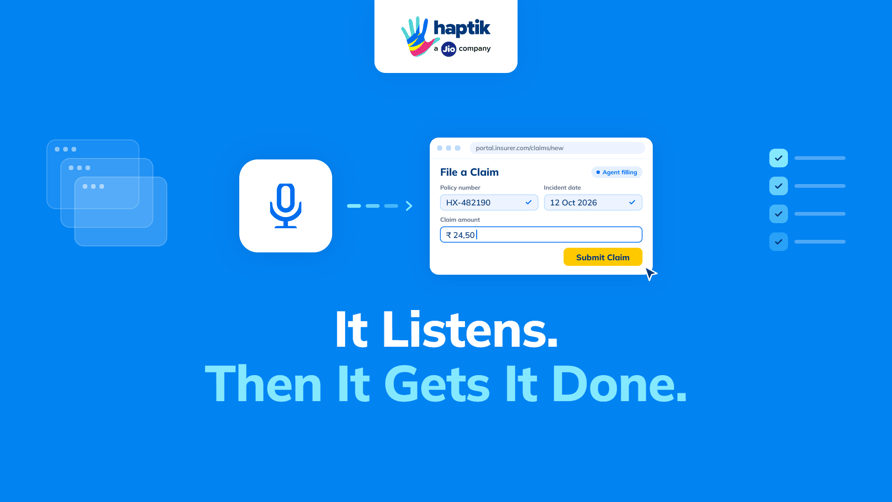
- The multimodal shift: Modern voice architectures combine real-time natural language processing with browser automation and computer-use tools, enabling AI voice agents to navigate graphical user interfaces (GUIs) mid-call.
- Dual execution model: High-performing architectures execute direct API calls where possible while deploying browser agent automation to fill gaps in legacy software, partner portals, and web forms without APIs.
- Enterprise requirements: Deploying voice-driven browser automation requires strict session isolation, deterministic state validation, sub-second action execution, and comprehensive audit logging.
- The strategic result: Combining voice interactions with web browser automation removes the requirement for clean, modern API stacks, enabling true end-to-end task resolution across legacy IT environments.
IFor years, the conversational AI industry maintained a clear boundary where voice platforms managed spoken interaction (listening, understanding, and speaking) while back-office integrations were left strictly to API connectors. If an enterprise wanted a voice AI agent to perform an action mid-call such as processing a loan application or checking a claim status, it relied on well-documented REST APIs.
In enterprise environments, however, clean APIs are often the exception rather than the rule.
Core business functions across insurance, healthcare, and banking frequently run on legacy mainframes, custom internal web portals, or third-party partner portals that lack modern API infrastructure. When a caller asks a voice AI agent to resolve an issue that lives inside an un-API’d system, traditional integrations break down.
To solve this API bottleneck, voice AI agents are expanding beyond spoken interactions. By incorporating browser automation and computer-use agents, modern voice systems can interact with human-designed web interfaces directly while conversing with callers in real-time.
The Enterprise Integration Gap
Executing real-time actions during a live phone call is essential for resolution. However, relying solely on traditional API integrations presents several operational challenges:
- Legacy core platforms: Core insurance policy systems, hospital databases, and banking portals built decades ago often lack modern API access, requiring manual data entry by human staff.
- Third-party partner portals: Enterprise workflows frequently depend on external web portals such as carrier tracking sites, government verification databases, or medical clearance platforms, that do not provide public API endpoints.
- High development costs and timelines: Building, testing, and maintaining custom API integrations across dozens of internal tools often requires months of engineering effort and significant capital investment.
When a voice AI agent encounters an un-API’d workflow, its options were previously limited to collecting information and creating a support ticket for a human worker. Browser automation changes this dynamic by enabling AI agents to interact directly with web applications on behalf of the caller.
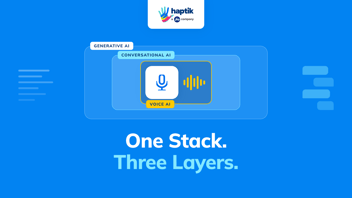
To navigate the vendor landscape, enterprise procurement teams should distinguish between three distinct platform architectures:
How Voice AI Meets Browser Automation
Combining real-time speech processing with browser automation creates an AI system capable of both conversational reasoning and computer navigation.
- Conversational intent capture: The caller explains their request in natural language (e.g., "I need to verify my insurance eligibility on the regional portal and update my address.").
- Dynamic task translation: The voice AI's reasoning layer translates the caller's request into a series of structured browser navigation commands (e.g., open portal, log in, navigate to member search, input policy ID).
- Headless browser execution: A secure, headless browser agent executes the required clicks, form fills, and navigation steps across the web interface in real time.
- Conversational bridge management: While the browser agent navigates the web portal, the voice AI maintains conversational flow with short, natural status updates (e.g., "I'm accessing the insurance portal now; one moment while it retrieves your file...").
- Real-time data verification: The browser agent reads extracted data directly from the webpage's DOM or visual interface, allowing the voice agent to confirm the results verbally with the caller before submitting changes.
Dual-Execution Architecture: APIs + Browser Agents
Browser automation is not a total replacement for traditional API integrations; it is an expansion layer. Modern enterprise architectures deploy a hybrid execution model that selects the most efficient integration path based on system availability.
| Execution layer | Best used for | Operational advantages | Tradeoffs |
|---|---|---|---|
| Direct API integration | Modern CRMs, ERPs, and internal databases with open endpoints. | Deterministic, sub-second execution speeds, low compute overhead. | Requires engineering time to build and maintain endpoints. |
| Browser agent automation | Legacy web portals, third-party partner sites, and software without APIs. | Zero API development required; works with any accessible web interface. | Slightly higher execution latency; vulnerable to unexpected UI layout changes. |
Enterprise Guardrails for Voice Browser Agents
Granting an automated voice agent the ability to navigate web portals and submit forms requires strict security and operational guardrails:
-
Sandboxed session isolation: Every call session must run within an isolated, ephemeral browser instance to prevent cross-tenant data leaks and session hijacking.
-
Sub-second latency management: Browser navigation must run on optimized, headless browser engines to ensure DOM manipulation and data extraction complete within sub-second thresholds, avoiding long silences on the call.
-
Deterministic submission guardrails: For high-stakes transactions (such as financial transfers or address changes), the browser agent must freeze before final submission, requiring the voice AI to obtain explicit verbal confirmation from the caller.
-
Visual and semantic UI parsing: Modern browser agents utilize computer-vision models combined with DOM parsing to locate page elements based on semantic meaning rather than fragile XPath selectors, preventing breakage when website layouts update.
-
Screen recording and audit logging: Every browser interaction must generate a complete, time-stamped visual audit trail, including screen recordings and network traffic logs, for legal and compliance review.
Real-World Enterprise Use Cases
Combining voice intelligence with browser automation unlocks workflows previously considered impossible to automate without major custom engineering:
1. Insurance claims and third-party portal verification
An insurance voice agent verifies coverage by navigating a regional healthcare provider’s web portal in real time during an inbound call, retrieving eligibility status and reading co-pay details directly back to the policyholder.
2. Logistics and carrier status tracking
A logistics voice agent answers customer tracking inquiries by navigating legacy carrier shipping portals, solving CAPTCHAs via computer-vision models, and extracting real-time location details without relying on direct API feeds.
3. Banking and legacy core systems navigation
A financial service agent processes complex account updates by navigating a legacy internal web application, filling out necessary verification fields, and logging transaction confirmations directly into the software interface.
How Haptik Approaches Voice and Workflow Automation
Haptik designs enterprise AI agents to drive real business outcomes across complex technology environments:
Comprehensive action execution
Haptik’s conversational platform combines real-time voice orchestration with pre-built enterprise connectors and flexible workflow automation, enabling agents to execute complex backend tasks across both API-enabled and legacy software systems.
Built for regulated enterprise infrastructure
Engineered for strict security standards, Haptik provides localized data residency options, and seamless integration with existing contact center and enterprise software stacks.
Proven scale and execution
Supported by 500+ enterprise deployments, Haptik's forward-deployed engineering teams collaborate directly with business leaders to map complex workflows and deploy AI agents built for real-world operational environments.
The Bottom Line
The future of enterprise voice AI extends beyond natural conversation. By pairing real-time speech intelligence with browser automation and computer-use tools, AI agents can navigate legacy software, interact with third-party web portals, and execute complex workflows without requiring months of custom API development. Combining voice reasoning with browser execution unlocks true end-to-end task resolution across every system in your technology stack.
FAQs
A browser agent is an automated tool that uses web browser interfaces - clicking buttons, filling forms, and reading page text - driven by an AI's decision-making engine. When paired with voice AI, it allows the agent to navigate web portals on behalf of a caller in real time.
While APIs are faster and more direct, many legacy enterprise systems, government portals, and third-party partner websites lack modern REST APIs. Browser agents allow voice AI to interact with these systems immediately without waiting for custom API development.
Headless browser automation executes actions significantly faster than human users. When combined with effective voice interaction design such as conversational bridge phrases, browser agents complete web actions within natural call turn-taking windows.
Modern browser agents combine DOM parsing with visual computer-use models to identify page elements based on semantic meaning rather than hard-coded structural paths, maintaining reliability even when site designs update.
Yes, provided the platform enforces isolated, sandboxed browser sessions, implements strict role-based access controls, requires verbal user confirmation for sensitive submissions, and maintains complete visual and network audit logs.
source on Google