


 Voice AI Agent
Sovereign Voice AI for Enterprise CX: From Compliance Checkbox to Procurement Gate
 Add as a preferred
source on Google
TL;DR
- The strategic shift: Data residency has evolved from a back-office compliance detail into a non-negotiable procurement requirement for enterprise voice AI.
- Residency vs sovereignty: Data residency governs where audio and transcripts are stored; sovereign AI dictates who controls the infrastructure, models, and operational execution under local law.
- The voice AI risk multiplier: Spoken interactions cross multiple technical hops - telephony ingress, ASR, LLM, TTS, and analytics - and every hop represents a potential data leak outside local borders if not explicitly localized.
- Audit-backed evidence: Enterprise buyers must look beyond vendor marketing claims by demanding independent CERT-In-accredited audit reports, real-time data traceroutes, and strict zero-retention sub-processor terms.
- Haptik's enterprise position: As an enterprise application and operational layer, Haptik provides localized voice AI execution built on localized data centers, backed by Jio proven infrastructure.
Data residency used to sit quietly on the compliance team's post-evaluation checklist. In 2026, it decides which voice AI vendors reach the RFP shortlist.
As enterprise customer experience (CX) shifts toward autonomous voice AI agents that process sensitive financial, health, and personal identity data in real-time, regulators, corporate buyers, and software providers have raised the bar. Localized data management is no longer an optional feature but a core procurement requirement.
What Sovereign AI Means for Enterprises
In enterprise technology, sovereignty describes an organization’s ability to build, deploy, and govern artificial intelligence systems using domestic infrastructure, verified datasets, local engineering talent, and clear legal frameworks.
To evaluate risk accurately, enterprise procurement teams should separate sovereign AI into four distinct layers:
| Data layer | Audio, transcripts, prompts, system logs |
| Infrastructure layer | Sovereign data centers, GPUs, telephony edge |
| Model layer | Base foundational LLMs, ASR, TTS weights |
| Operational control | Local governance, access permissions, jurisdiction |
- Data residency focuses narrowly on where data is stored and processed.
-
Sovereignty is broader as it governs who holds operational control over the tech stack, whose legal jurisdiction applies, and whether external entities can modify access rights.
Not every enterprise deployment requires total sovereignty across all four layers. However, matching the required layer of control to your specific operational risk profile prevents both compliance breaches and costly architectural over-engineering.
Why Residency Moved From Checkbox to Gate
The migration of data residency from a compliance footnote to a critical procurement gate is driven by three converging factors:
1. Sectoral regulatory mandates
Regulators across key sectors such as the Reserve Bank of India (RBI) for financial services, IRDAI for insurance, and SEBI for capital markets have established strict rules requiring customer financial records and core transaction logs to be processed and stored locally.
2. Evolving personal data frameworks
The enforcement of India’s Digital Personal Data Protection (DPDP) Act has heightened organizational accountability around processing personal data.
Because specific restricted-country transfer lists and cross-border notifications under Section 16 remain subject to evolving government updates, corporate legal counsels increasingly advise keeping sensitive customer workloads within Indian jurisdiction to mitigate future regulatory risk.
3. Market alignment across vendors
The enterprise landscape has responded to these demands. Global voice software providers now offer localized Indian data residency options, while domestic sovereign providers emphasize localized data architectures as a standard capability. Localized data handling has become table stakes across the enterprise software ecosystem.
How Voice AI Adds to Residency
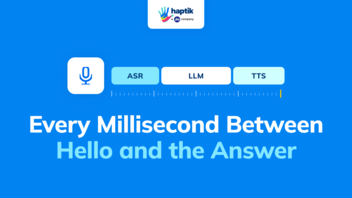
Voice AI introduces distinct architectural complexities compared to standard text-based conversational AI. A single real-time voice call traverses multiple technical hops across the processing pipeline:
Caller handset ➔ Telephony edge ➔ ASR (Speech-to-Text) ➔ LLM reasoning ➔ TTS (Text-to-Speech) ➔ Storage and analytics
Every hop in this pipeline is a potential data egress point if not explicitly pinned to a localized infrastructure stack.
Furthermore, voice interactions generate multiple sensitive data assets
- Raw audio recordings containing vocal acoustic features
- Real-time text transcripts
- Biometric voiceprints and phonetic profiles
- Prompt context windows containing CRM variables
- API payloads executed via backend function calls
The quiet risk in enterprise voice architectures frequently sits within third-party foundation model APIs. Even if an organization stores its primary database within local borders, routing speech recognition or LLM inference to overseas servers breaks local data residency guarantees.
True data residency must cover processing logs, temporary memory buffers, and backup archives, not just the primary database.
Procurement Questions That Separate Claims From Proof
When evaluating vendor claims regarding data localization and sovereign AI capabilities, procurement and security teams should require written, verifiable evidence across eight operational dimensions:
-
Hop-by-hop data mapping: Where are raw audio streams, transcripts, context prompts, and system logs processed and stored across every stage of the call?
-
Sub-processor transparency: Which third-party model providers, ASR engines, or cloud hosting vendors touch customer data, and in which geographic jurisdictions are they located?
-
Independent audit evidence: Can the vendor provide an independent third-party system audit report featuring a verified data traceroute?
-
Active security certifications: Which security certifications (e.g., ISO/IEC 27001:2022, SOC 2 Type II, HIPAA) are current, and are full audit reports available for review under NDA?
-
Private deployment flexibility: Does the platform support private cloud or on-premise execution layers for high-sensitivity workloads?
-
Retention and zero-data options: What are the contractual retention and deletion timelines, and can the platform enforce zero-data-retention rules on external model inferences?
-
Administrative access governance: Which support teams hold administrative access to production data logs, and from which physical locations are they permitted to log in?
-
Architectural ownership: Which layers of the voice pipeline (orchestration, NLU, telephony integration) are owned directly by the vendor versus licensed from third parties?
Where Haptik Stands in the Sovereign Ecosystem
Haptik operates as an enterprise-grade application, orchestration, and operational layer for conversational AI, providing structured CX execution for complex business environments.
Security and governance posture
The platform maintains a formal enterprise security framework featuring:
- ISO 27001:2022 certification
- HIPAA compliance for healthcare voice workflows
- Alignment with global data standards including GDPR and CCPA
- AES-256 encryption for data at rest and TLS 1.3 for data in transit
- A dedicated public Trust Portal for continuous compliance monitoring
Enterprise roots and ecosystem integration
Haptik combines localized research and development in Indian language understanding with enterprise-scale infrastructure. With over 500 enterprise deployments, Haptik provides conversational AI solutions tailored specifically for India's key verticals like banking, financial services, insurance, healthcare, and others.
Forward-deployed data path mapping
To streamline vendor evaluation, Haptik's forward-deployed engineering teams work directly alongside enterprise cybersecurity, legal, and risk departments. These teams map complete end-to-end data paths, document sub-processor relationships, and assemble comprehensive compliance evidence packs formatted specifically for submission to industry regulators.
The Bottom Line
Enterprise buyers should treat data residency as an essential operational gate rather than an afterthought. Demand verifiable, hop-by-hop architectural proof, evaluate the distinct layers of sovereign control, and select vendors capable of providing audited evidence that matches your organization's specific regulatory and risk requirements.
FAQs
Data residency refers specifically to the physical geographic location where data is stored and processed. Data sovereignty is broader, encompassing who holds legal control over the underlying infrastructure, models, and operational software, and whose statutory laws apply to that data.
The DPDP Act establishes a framework where cross-border transfers are generally permissible unless restricted by specific government notifications under Section 16. However, sector-specific regulators (such as RBI and IRDAI) maintain strict data localization mandates for sensitive financial and operational records that operate independently of DPDP rules.
Not always. The requirement depends on your organization's specific regulatory status and threat model. Sovereign compliance can be achieved through locally hosted, single-tenant private cloud environments or sovereign public cloud data centers.
Yes, provided they host their entire execution stack, including speech recognition, LLM inference, speech synthesis, and analytics logging, within Indian data centers without routing telemetry to international sub-processors.
Request an independent CERT-In empanelled audit report, a complete sub-processor list detailing server locations, current ISO/SOC2 security certificates, and explicit contractual retention and zero-data-retention terms.

source on Google