


 Voice AI Agent
When customers need answers fast - in response to a delayed order, failed payment, or a service outage - they still reach for the phone.
Despite years of digital transformation, voice remains the most trusted channel for high-intent, high-stakes scenarios. What has changed, however, is what customers expect when they call.
Long IVR menus, or missed context is not tolerated. In the voice-first era of 2026, customers expect conversations that are natural, informed, and decisive.
The shift has made enterprises rethink voice support from the ground up. And at the center of this transformation are AI customer service agents built for voice.
ALSO READ: How Voice Agents Redefine Industries
Why Voice Is Being Reimagined in 2026
While chat and messaging benefited from rapid advances in conversational AI, voice support remained anchored to legacy IVRs and routing logic. That gap is now closing.
Improvements in speech recognition accuracy, real-time language understanding, and low-latency AI models have made natural, multi-turn voice conversations viable at enterprise scale.
READ: Are Conversational AI Agents Just Fancy Chatbots?
More importantly, customer expectations have caught up. Voice is not judged by how quickly a call is answered, but how swiftly intent is grasped and resolved. Customers expect the same intelligence on voice that they experience on digital channels without sacrificing speed or trust.
This is why voice is the front door to customer experience.
From IVRs to AI Customer Service Agents on Voice
Traditional voice systems were designed for routing as IVRs, optimized for deflection, pushed customers down predefined paths until they reached a human agent.
AI agents for customer service fundamentally change this model.
Instead of static menus, AI agents engage in dynamic conversations. They interpret intent in real-time, maintain context across turns, and take action across backend systems.
In voice, it means customers explain their problem naturally - enabling the AI agent to diagnose, act, or escalate with full context.
In the voice-first era, success is not only about call handling efficiency but also end-to-end resolution within the conversation itself.
Key Trends Shaping AI Customer Service in the Voice-First Era
Voice as a channel has been rebuilt. And the shift isn’t merely because of better telephony or faster speech-to-text, but because of the emergence of customer service AI agents that think, decide, and resolve in real-time.
Trend #1: From scripted flows to adaptive conversations
AI customer service agents on voice handle interruptions, clarifications, and multiple intents in a single call - mirroring how real conversations unfold.
Trend #2: Context continuity
Voice AI agents pull context from CRM records, past interactions, service tickets, and transactional systems, allowing customers to pick up where they left off instead of starting from scratch.
Trend #3: Seamless escalation
When a human agent is required, AI customer service agents provide the transcript, diagnosis, actions taken, and next-best steps - turning escalation into a continuation, not a reset.
High-Impact Voice Use Cases for AI Customer Service Agents
The impact of voice-enabled AI customer service agents is most visible when applied to industry-specific moments where speed, accuracy, and trust is paramount.
Retail
In retail, voice conversations peak when something goes wrong, like delayed deliveries, missing orders, payment failures, or return disputes.
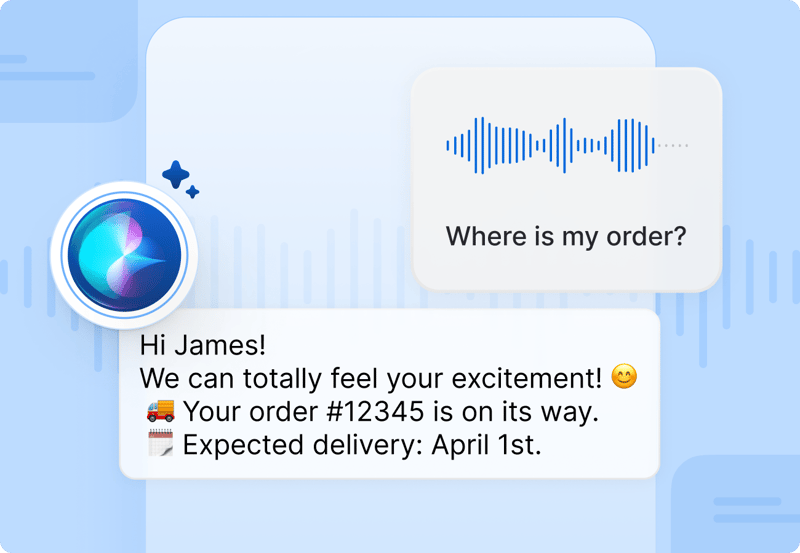
Voice-powered AI customer service handles tracking orders, explaining delays, initiating refunds or replacements, and coordinating next steps in real-time. For customers, voice provides reassurance; for retailers, AI agents absorb volume without compromising experience during peak seasons.
Fintech
For fintech brands, voice AI agents handle transaction failures, billing discrepancies, account inquiries, and card-related issues - securely verifying identity, retrieving contextual account data, and guiding customers through resolution.
By integrating with core banking systems, AI agents reduce wait times while maintaining the trust that voice interactions demand.
Healthcare
In healthcare, AI customer service agents assist with appointment scheduling, eligibility checks, prescription status, and billing inquiries while escalating clinical or high-risk situations to human staff.
For care providers, voice-enabled AI helps reduce call center strain while improving access and responsiveness without compromising compliance or patient trust.
Real estate
Real estate involves urgency and coordination across multiple parties. Voice-driven AI customer service automates property inquiries, site visit scheduling, as well as post-sale or post-lease service requests.
RELATED: How AI Agents Elevate Real Estate with Property Discovery, Sales & Support
By managing high-volume voice interactions, AI agents help real estate firms stay responsive during peak demand periods.
Travel and hospitality
In travel and hospitality, disruptions are inevitable - and voice is the channel customers turn to when plans change.
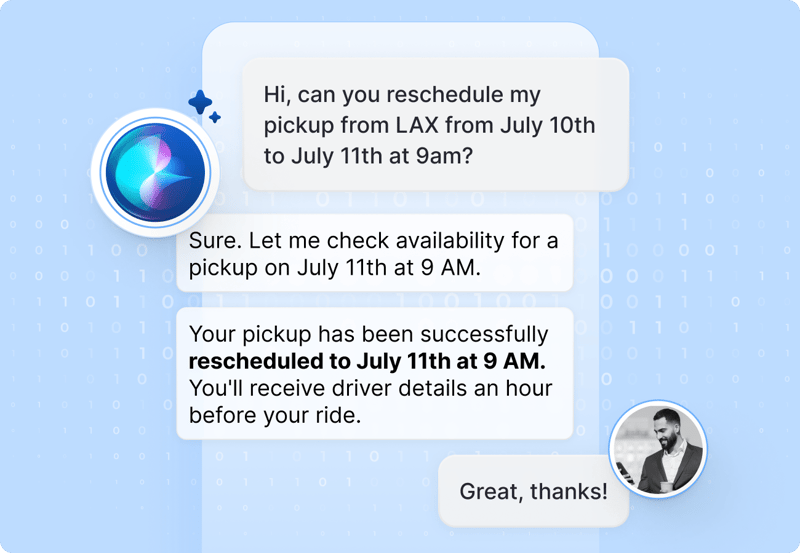
AI agents manage booking changes, cancellations, loyalty inquiries, and service disruptions at scale. During delays or outages, voice-enabled AI proactively communicates updates, recommends alternatives, and alleviates pressure on human teams while preserving guest experience.
Looking Ahead: Voice as the Front Door to CX
As we move deeper into 2026, it’s clear that voice isn’t a fallback channel - rather the first customers inevitably choose when stakes are high.
AI customer service agents make this possible at scale with intelligence, consistency, and speed to voice experiences that were previously high on friction. For enterprises, modernizing voice is about building an AI-driven foundation for customer trust.
Those that invest now won’t just improve call handling but also reset customer expectations when they pick up the phone.




source on Google